
Beneath the Shame
is a guide structured in 4 parts, 130+ pages of material in total. The first 3 sections take you deep into the three pillars of self-compassion, supported by psychological frameworks that help you understand why patterns form and how to shift them in everyday life.
The final part zooms out to explore how humans across time have made sense of the “mind–body” connection. And explains why people with ED’s may struggle with this.
*All resources linked within!
Section 1 Only

Explore the first section and experience its approach before deciding if you want to continue.
$15 USD
Unlock Sections 2–4 for $43 during the launch offer!
The $3 difference helps cover transaction costs of two separate purchases.
Full 4-Part Guide

$80 USD
NOW $55!!
Save $25 during the launch period
code: LAUNCH55

Guide + Community
LIMITED
SPOTS
$100 USD
What’s Inside

Section 1
Internal Beliefs and Values
You’ll how shame-based patterns can hide your authentic self. We look at our inner dialogue and identify shame based narratives that quietly shape behaviour and decision-making.
video follow-along to discover your top 5 values
10 journal prompts
podcast recommendations
introduction to Self-Compassion
practical body-based and writing practices
graphics and visuals to make complex ideas easier
clear explanation of self-kindness
27 pages total
Section 2
Media & Society
You’ll explore how societal messages, comparison, and cultural ideals reinforce shame. This section introduces common humanity and shows how shared experience can soften isolation and self-blame.
11 journal prompts
affirmation / grounding practices
reframing tools
clear explanation of common humanity
psychological frameworks like attachment theory and IFS
practical tools to help you notice comparison
video and book recommendations
45 pages total
Childhood Influences
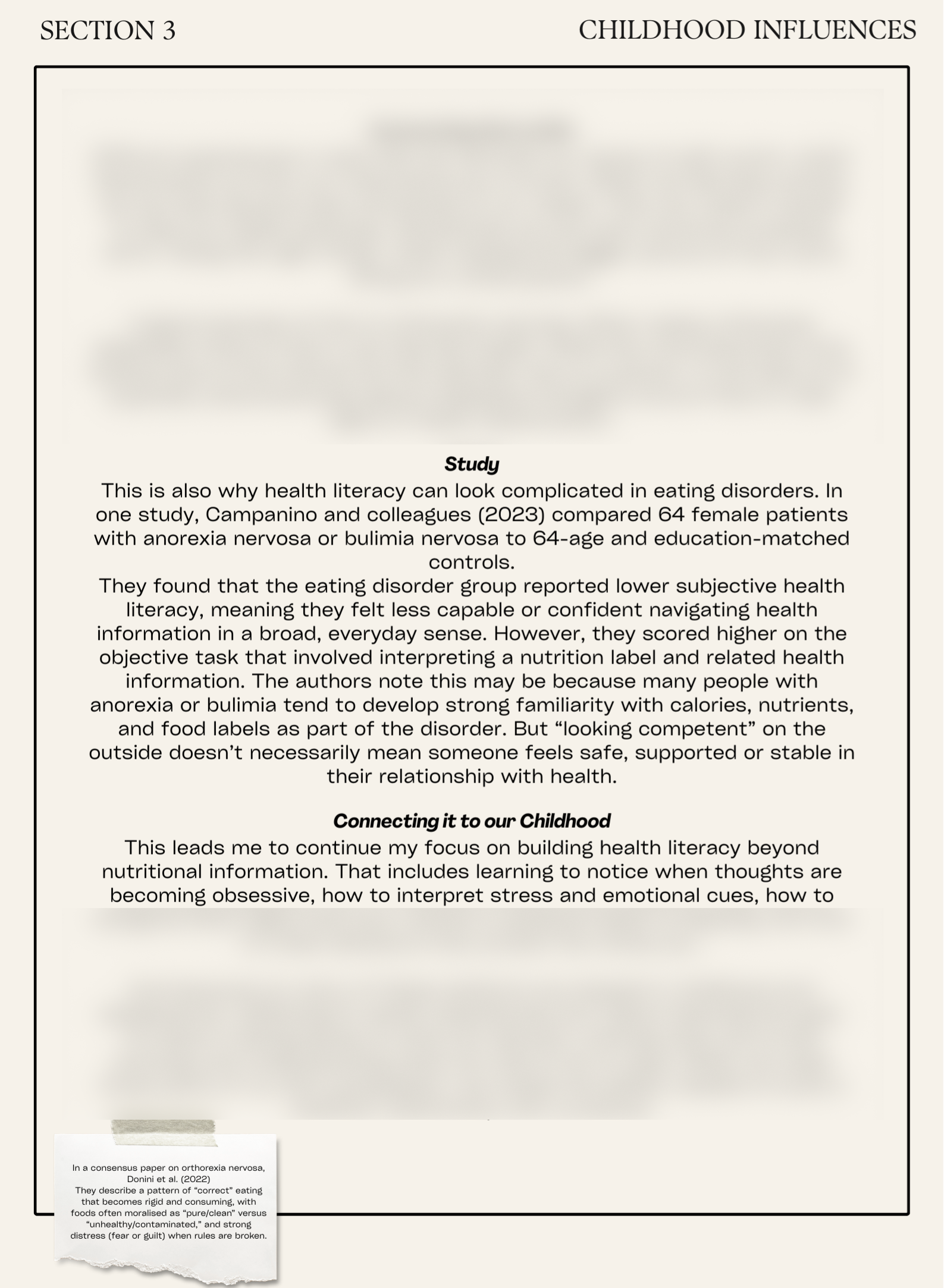
You’ll explore how early experiences shape your sense of safety, self-worth, emotions, and coping patterns. This section helps you reflect on childhood messages, reconnect with your inner child, and understand how early relationships may still be influencing the way you see yourself.
clear explanation on how Toxic Shame can develop in childhood
13 journal prompts
guided reflections on childhood patterns
re-parenting practices
understanding how to identify and name emotions
diving deeper into psychological frameworks like IFS
clear explanation of mindfulness
video and book recommendations
Section 3
32 pages total
Section 4
Connecting the Dots
You’ll explore the “mind–body” disconnect often experienced by people with eating disorders. This section is meant to decompress after the work we’ve done in the first 3 sections. And emphasizing the importance of reconnecting with your body.
grounding and body-awareness practices
“mind-body” connection tools
how to identify emotions in the body
understanding how the “authentic self” hides behind coping mechanisms
12 journal prompts
30 pages total
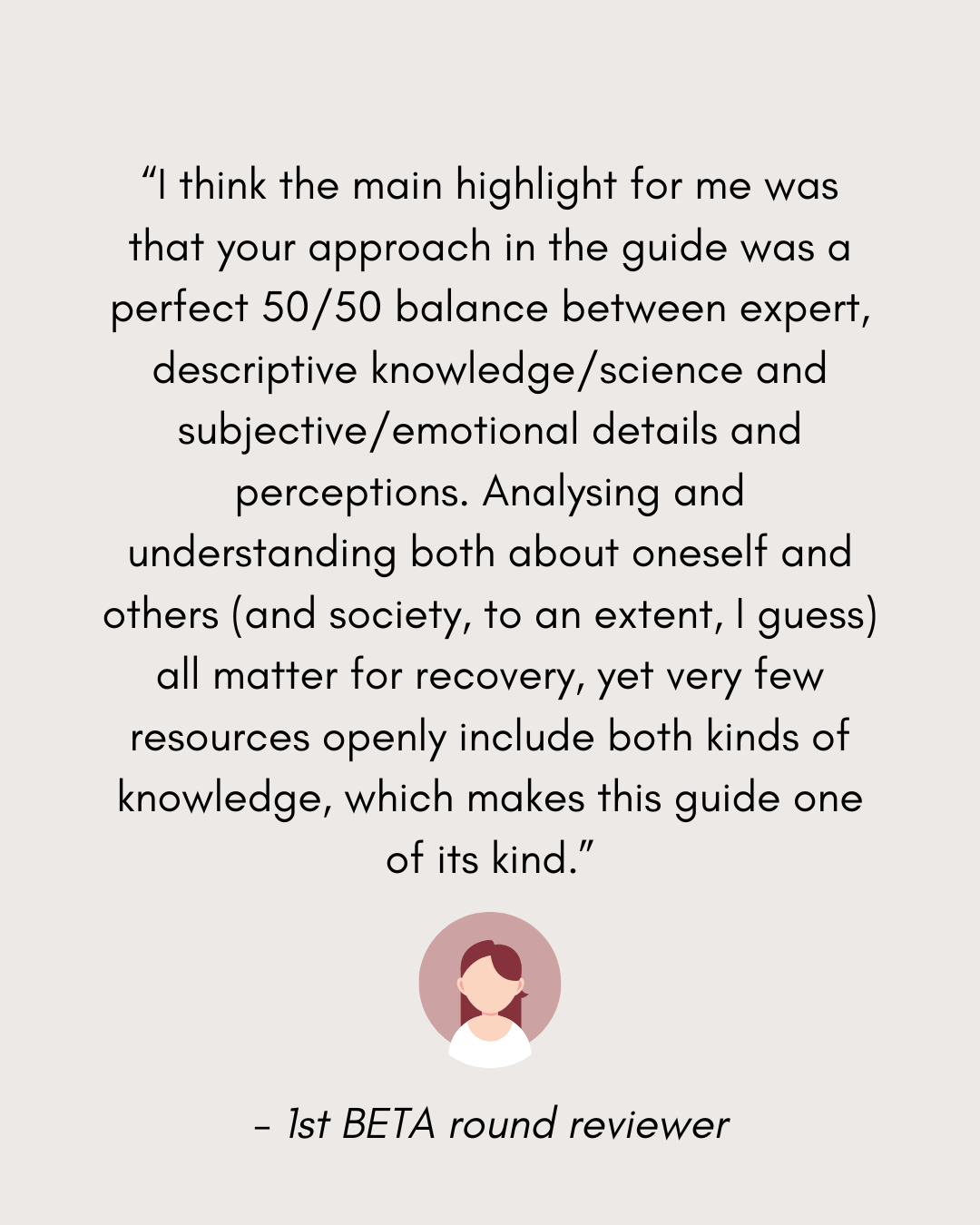
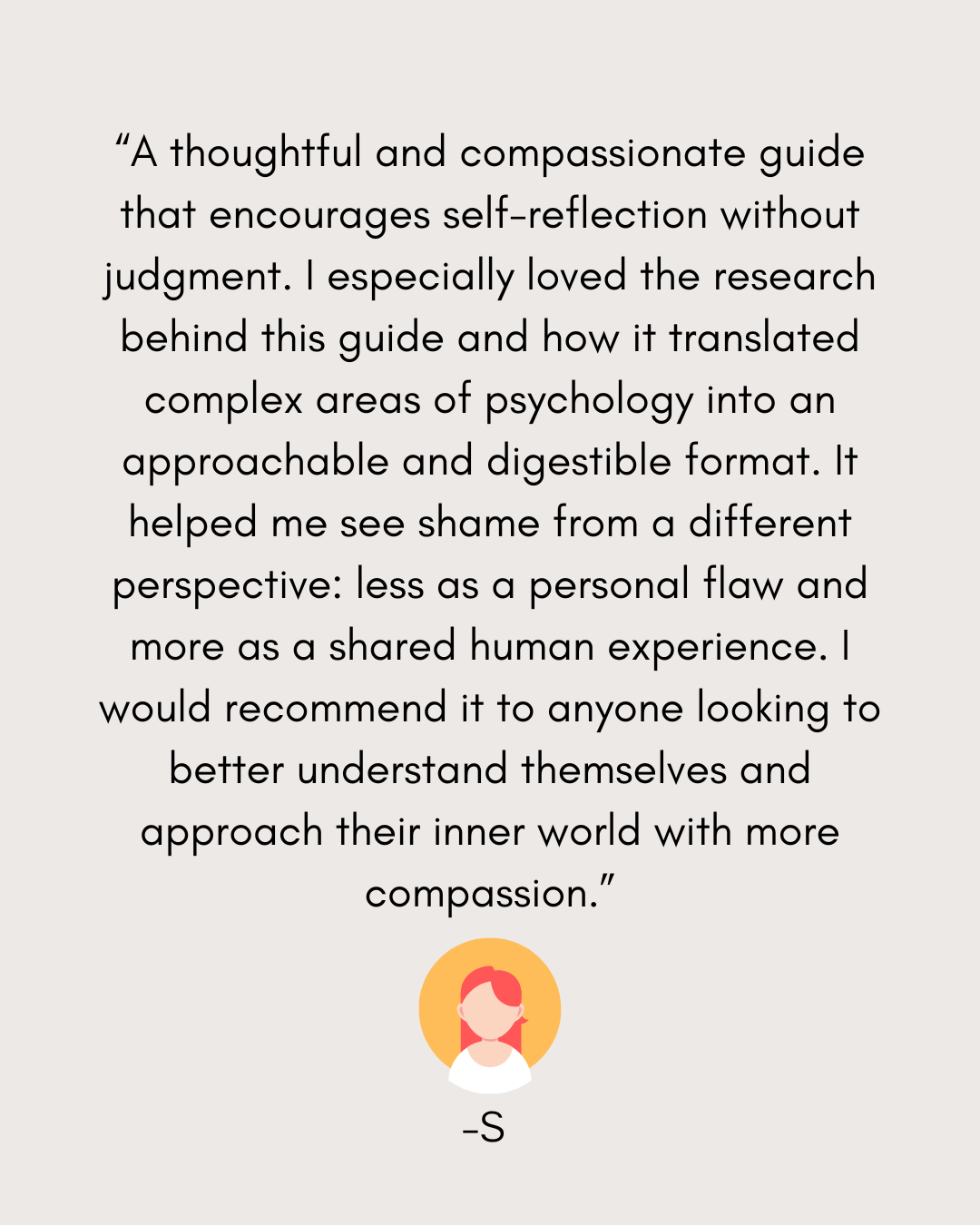
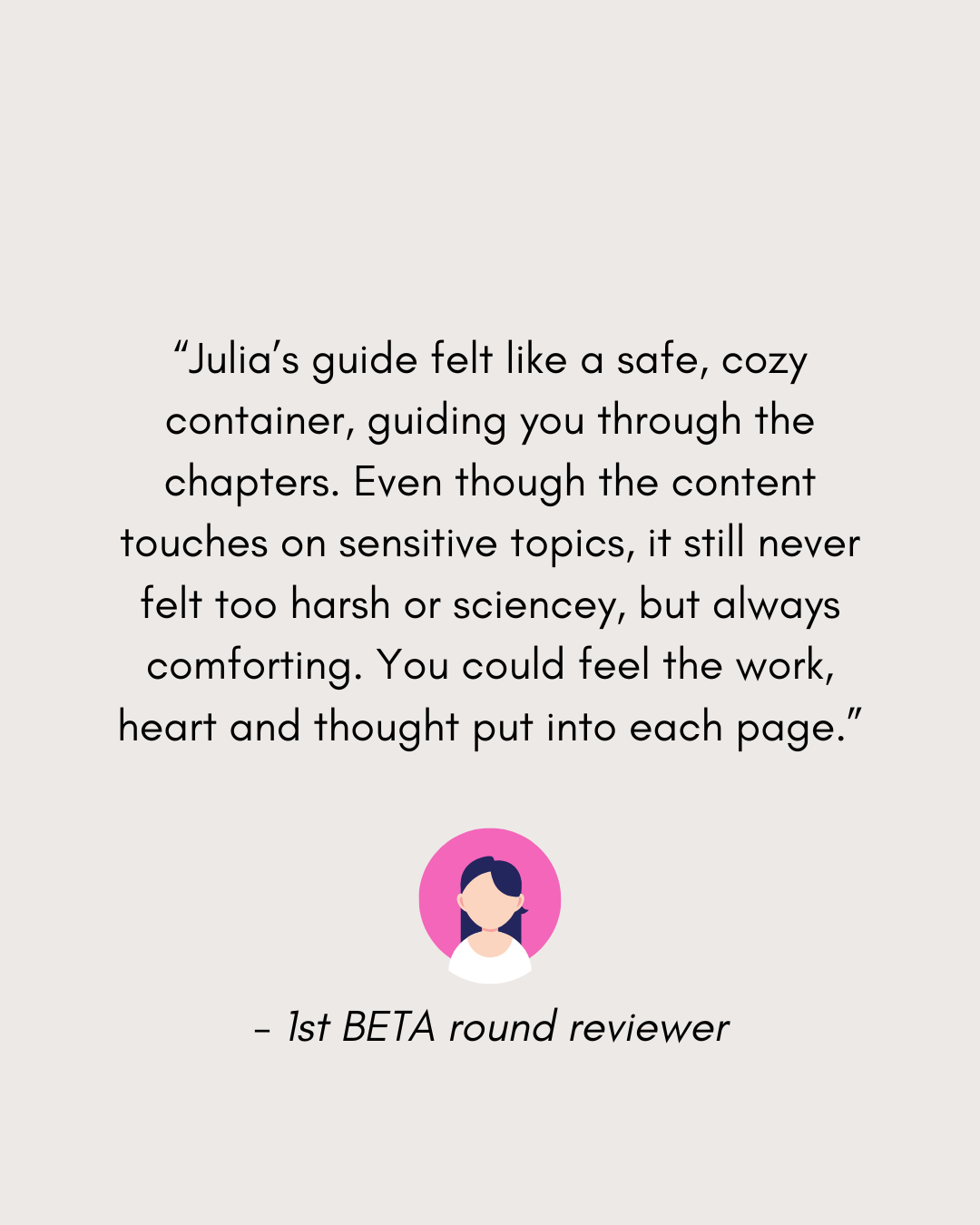
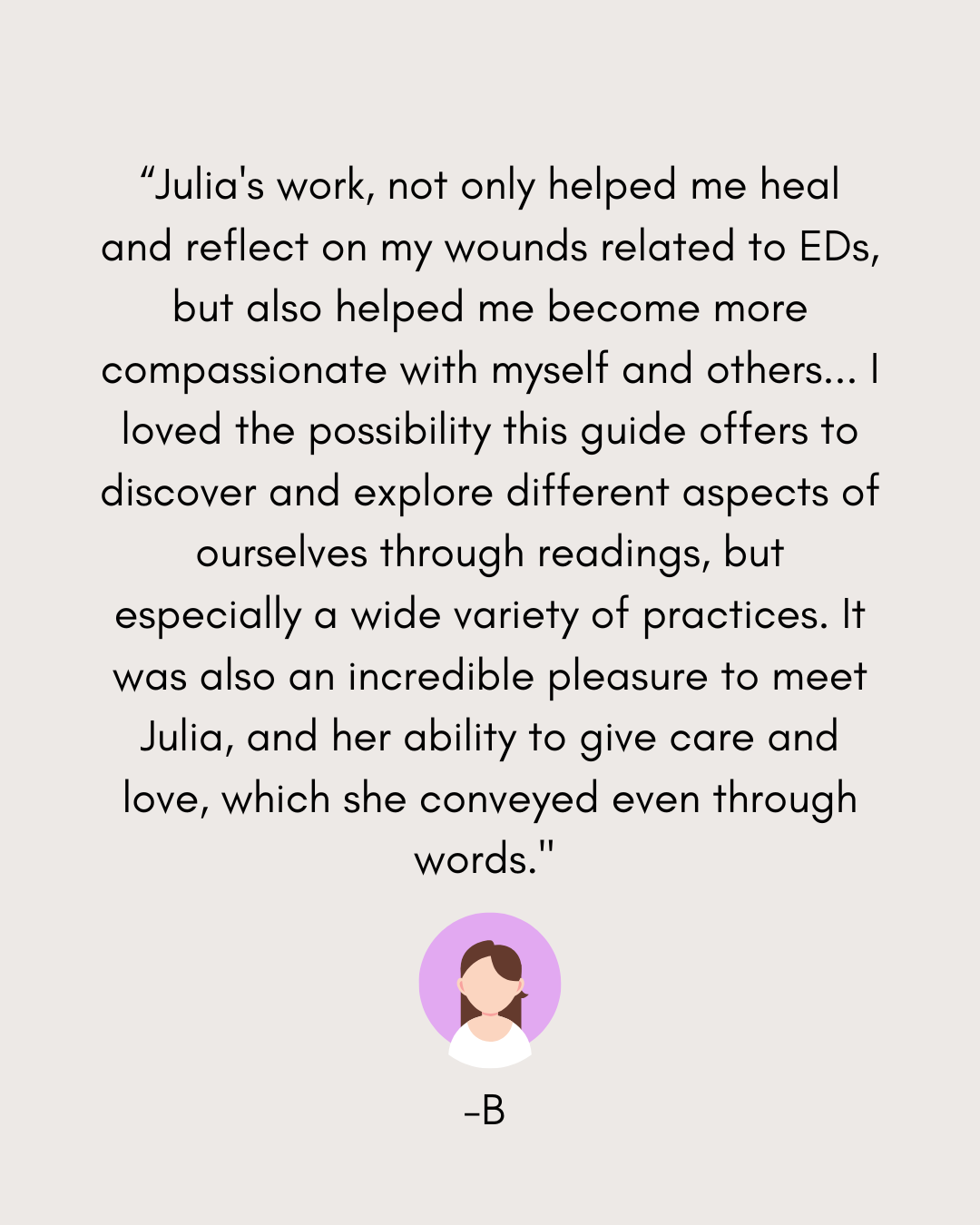
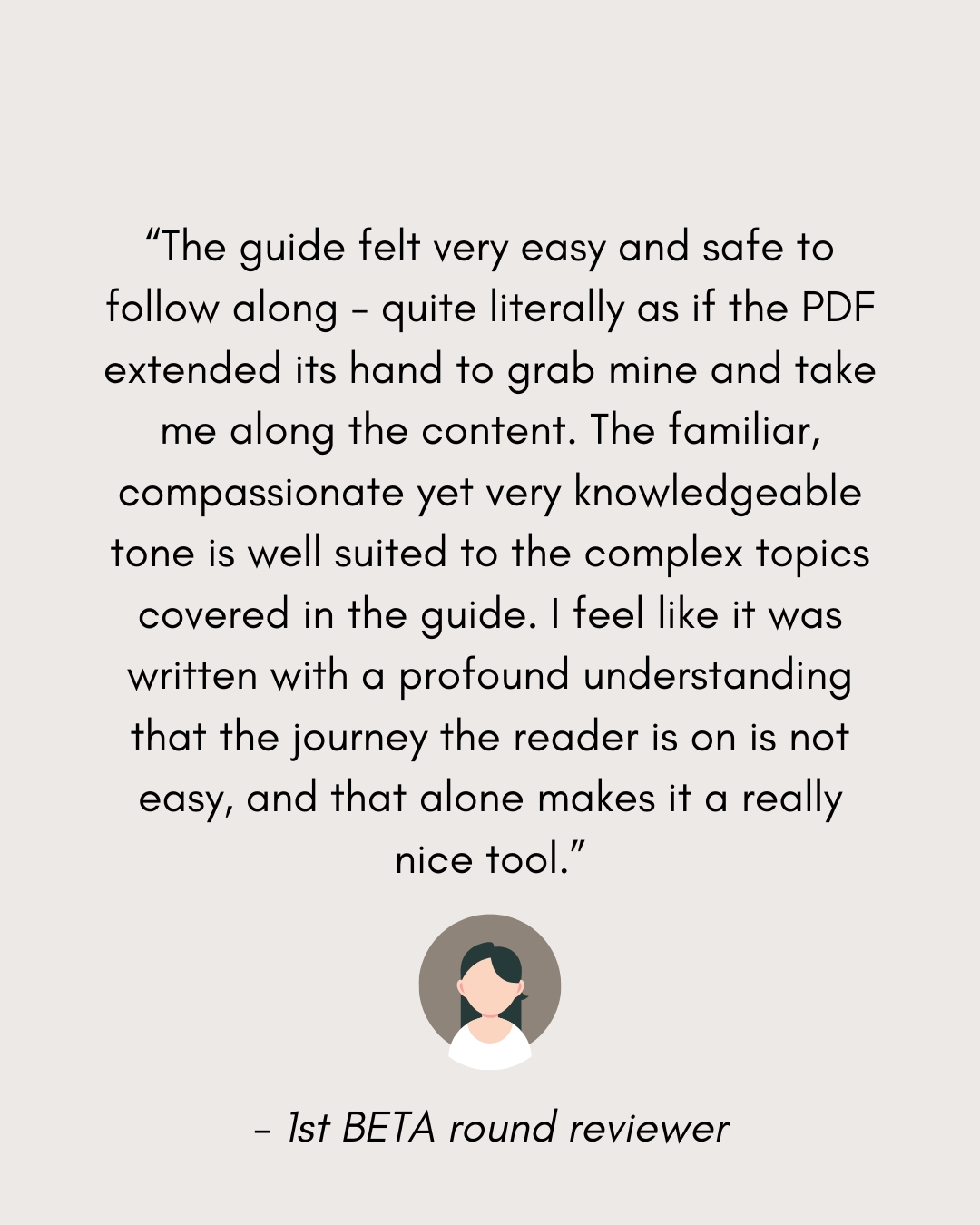
Testimonials
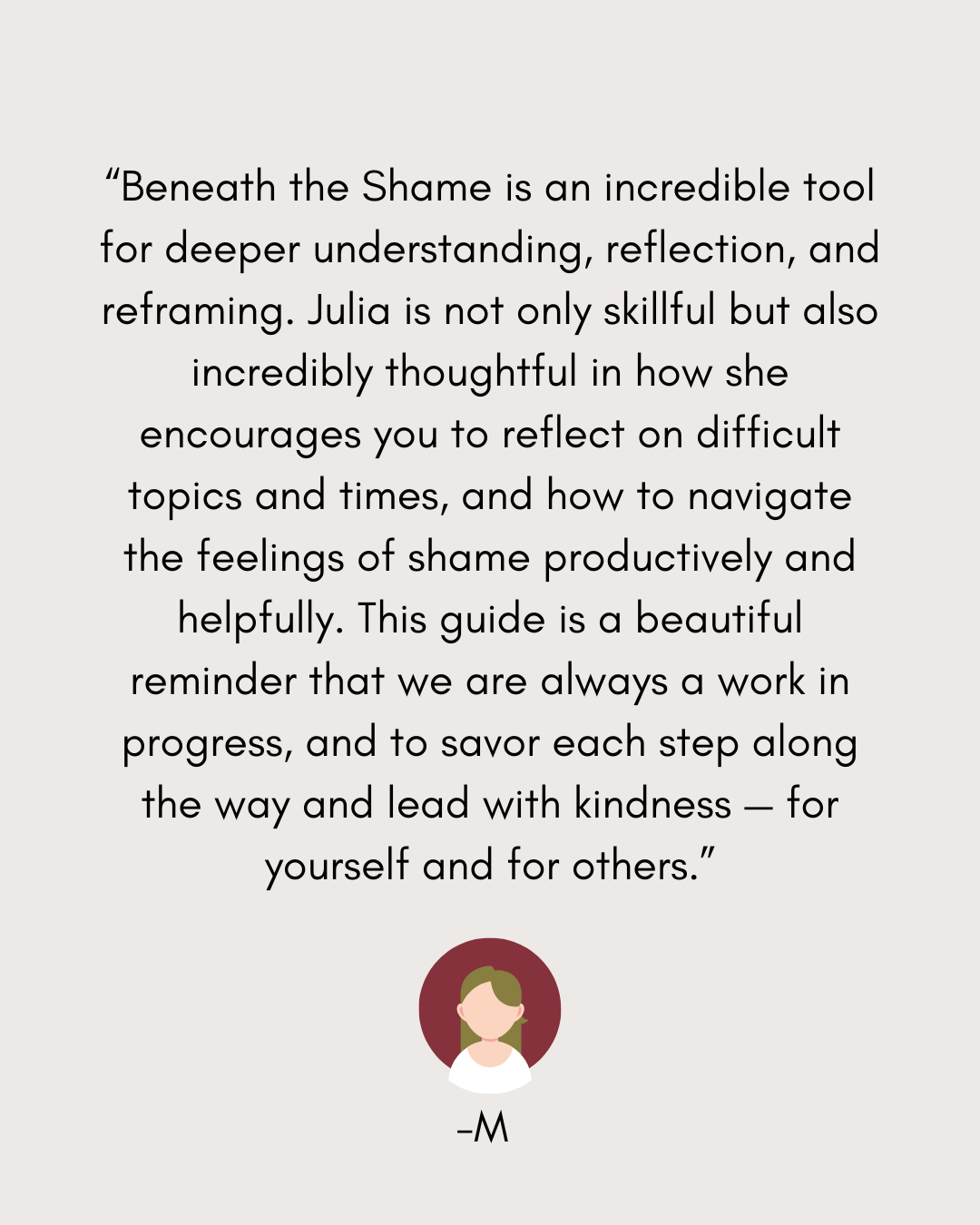
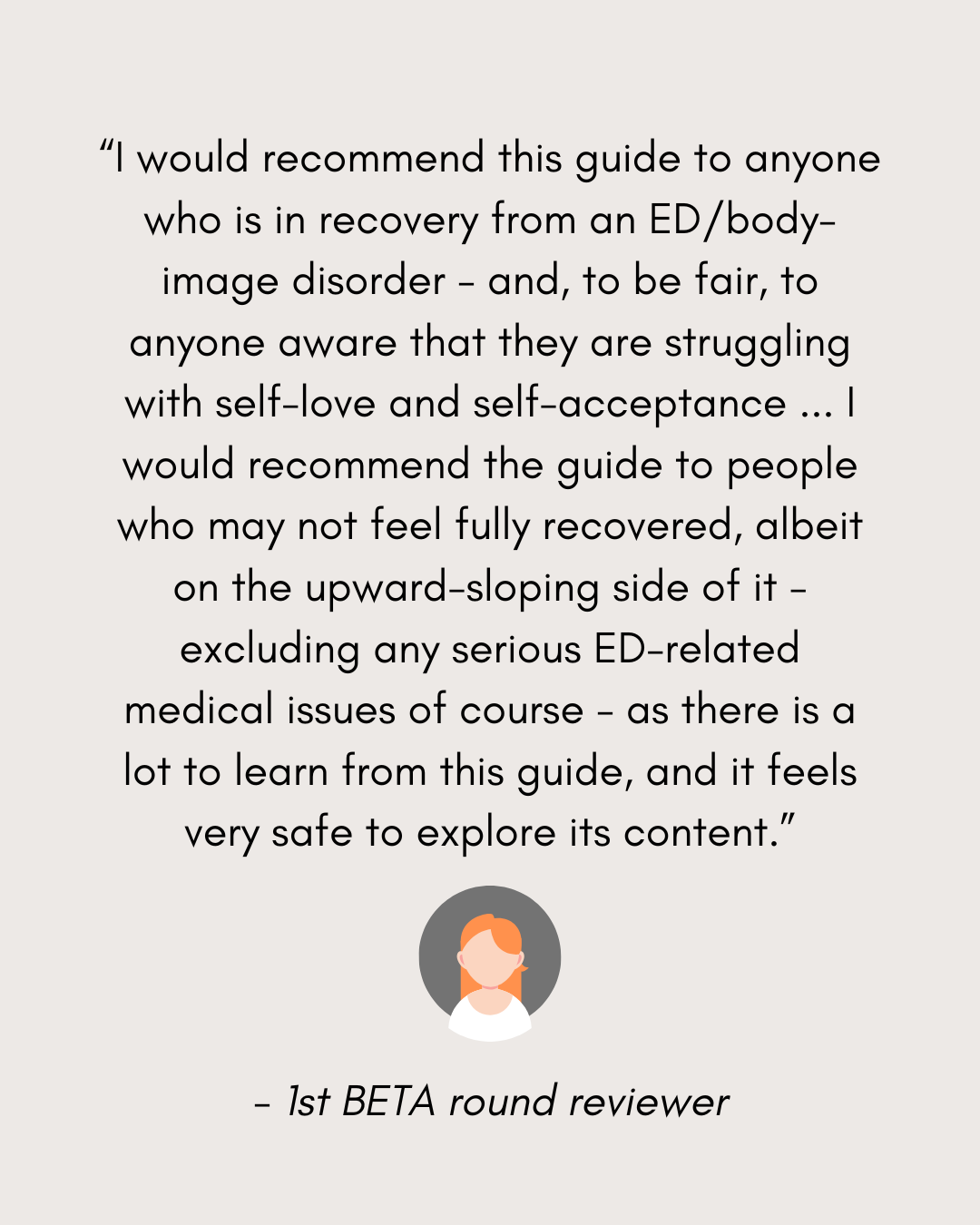
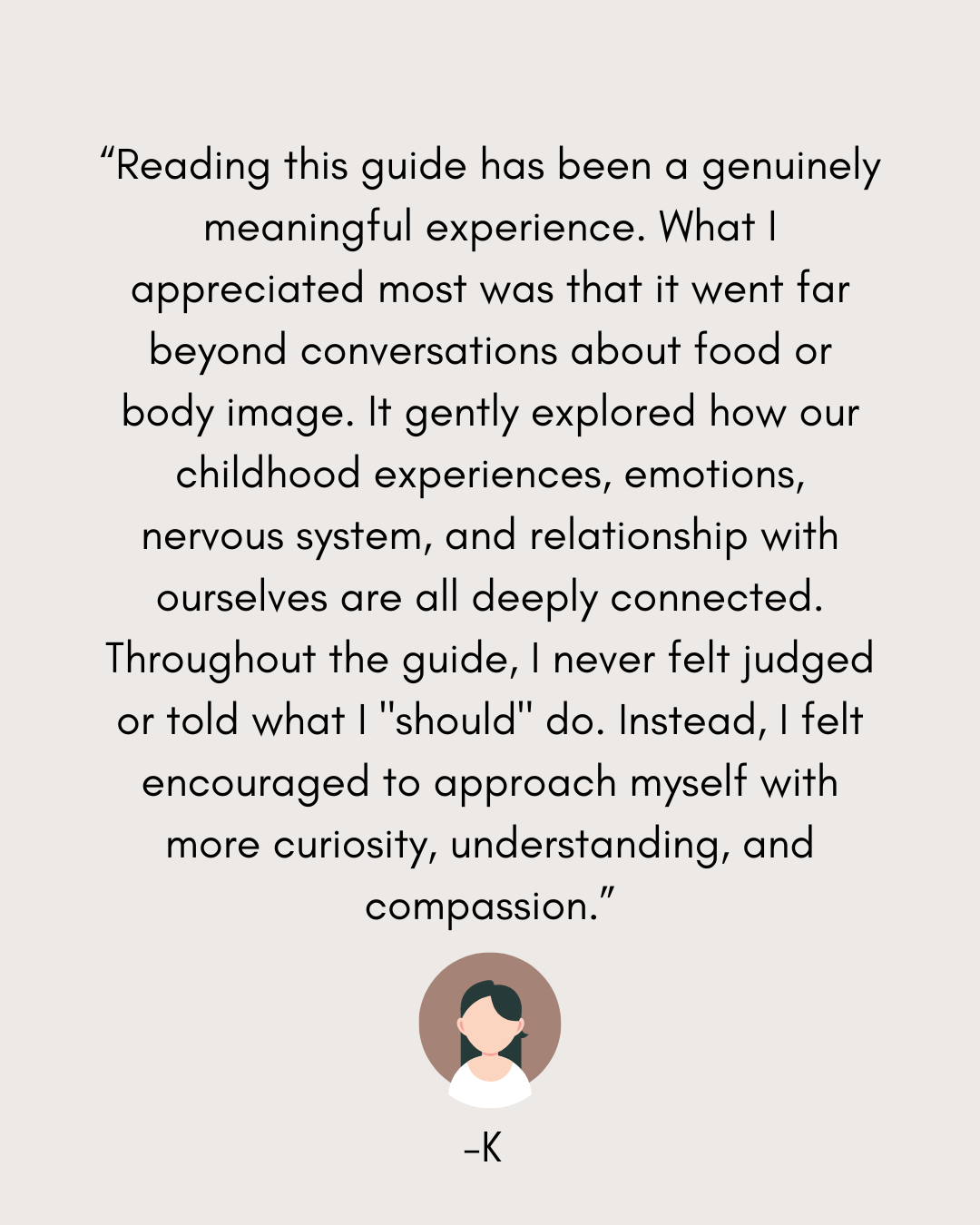
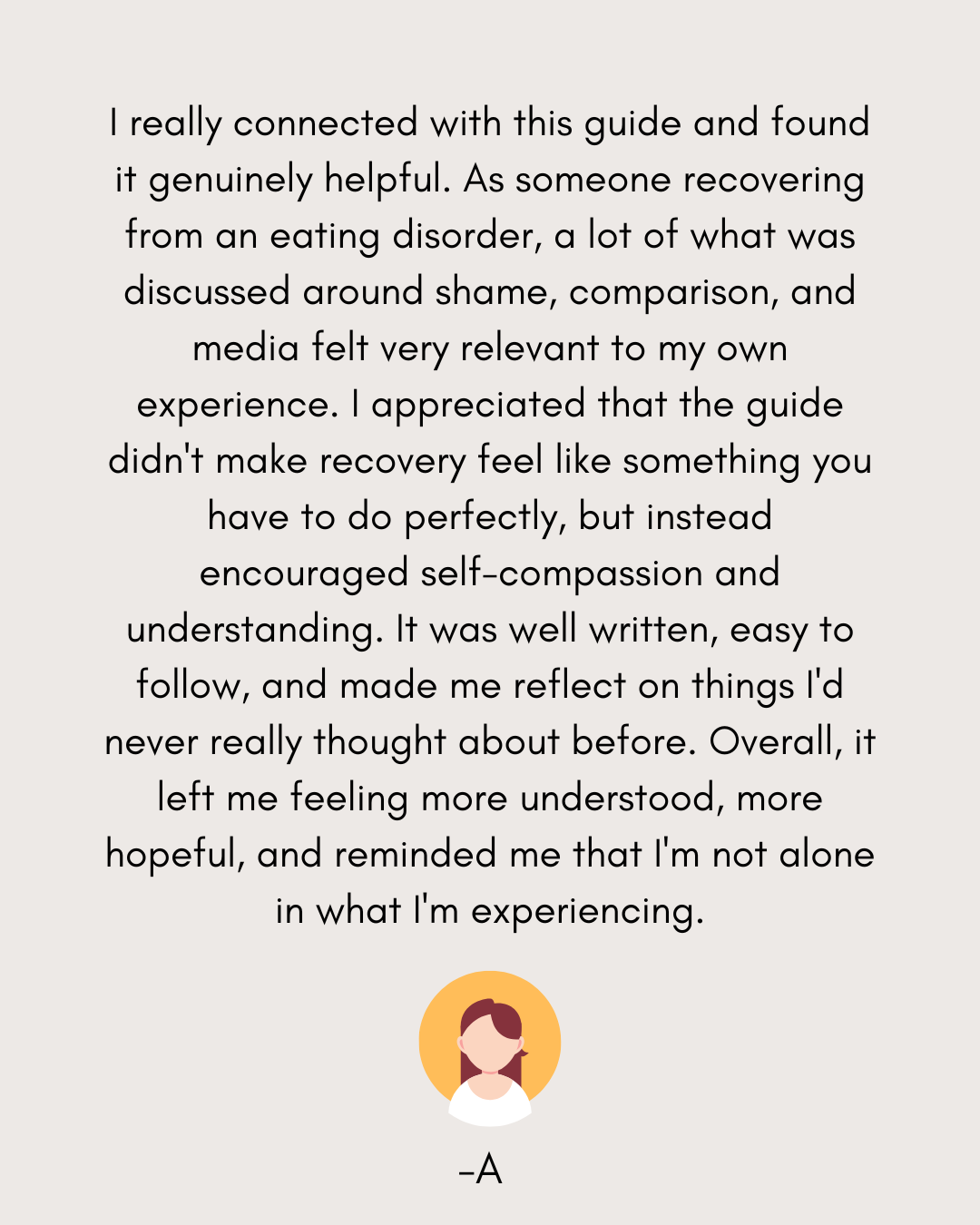

Community Access
Start Date: August 2
1. 8-week guided pace
We move through the 4 sections together, spending 2 weeks with each section so there is time to read, reflect, journal, practise, and integrate.
2. Weekly group calls
Each call includes:
40 minutes of quiet guided work time
40 minutes of optional sharing, reflection, and discussion
Offering both structure and connection.
3. Private group chat
A space to ask questions, share reflections, celebrate small wins, and connect with others moving through the guide at the same time.
4. 1:1 email check-ins
A weekly personal check-in where you can share what’s coming up, ask questions, or receive gentle support around your pace and reflections.
Disclaimer: By joining Beneath The Shame Community, you acknowledge that this is a peer-based, reflection space. It is not group therapy, clinical treatment, crisis support, or a substitute for professional care.
SECTION 1
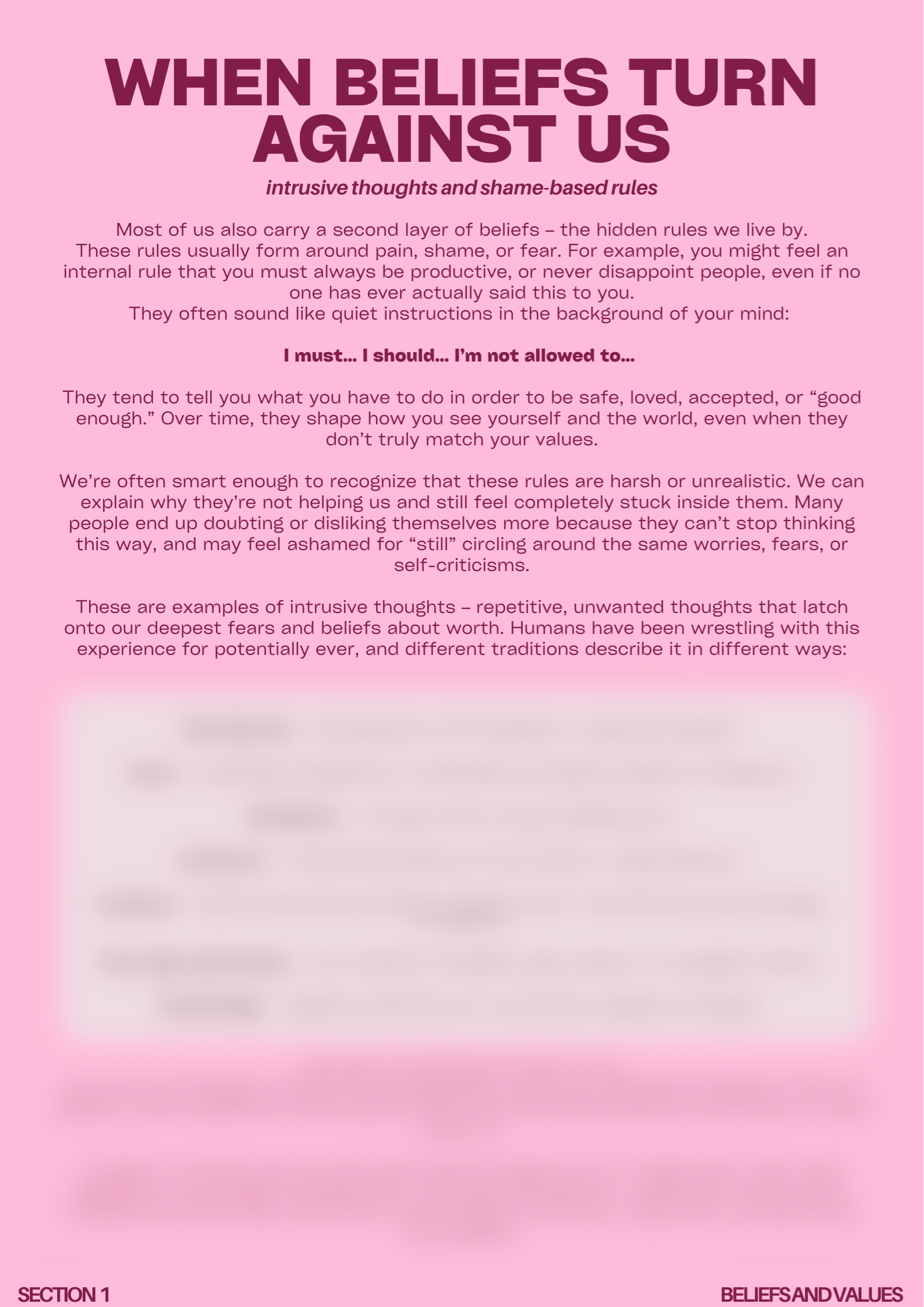
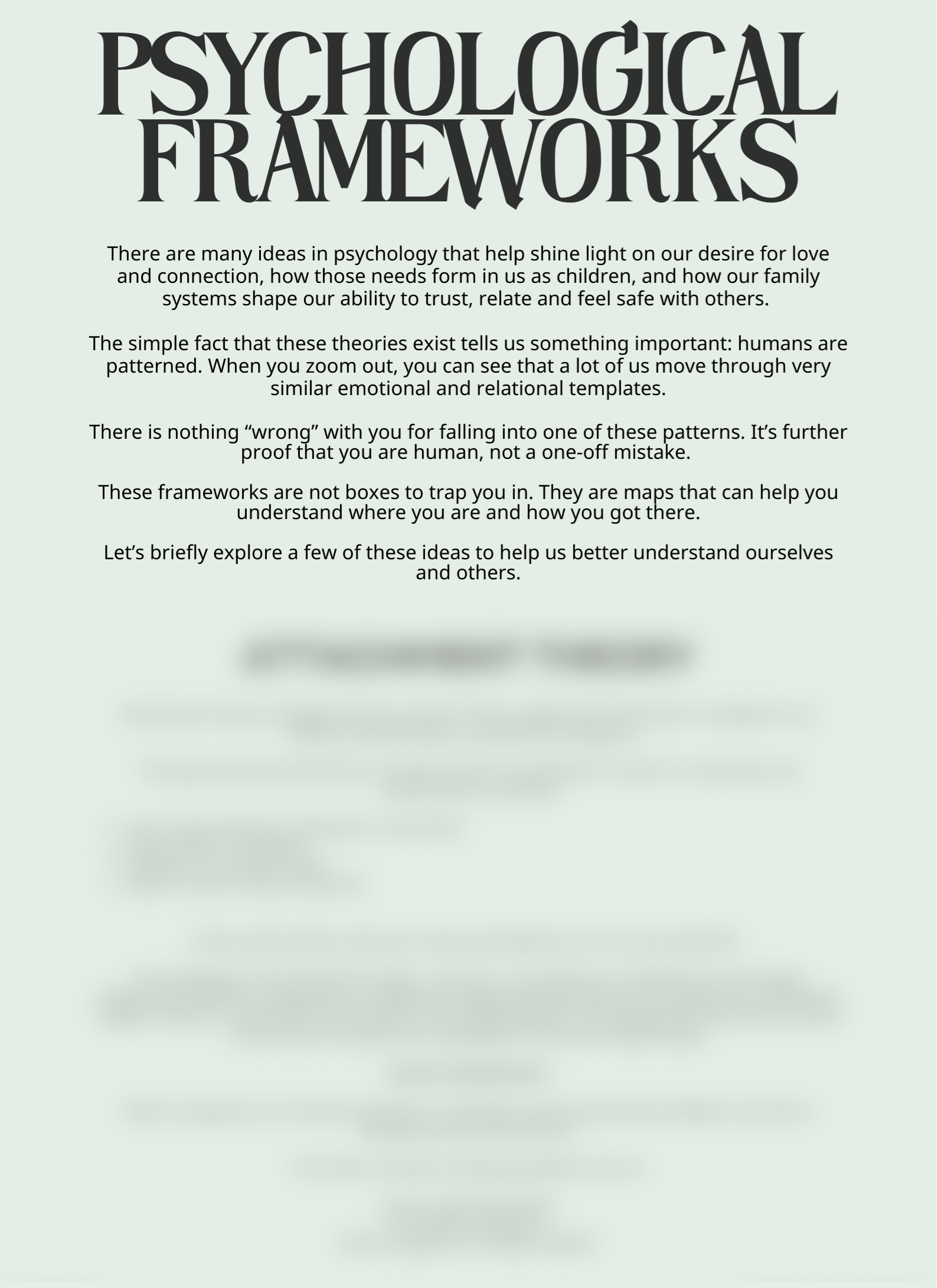
Clear Visual Diagrams
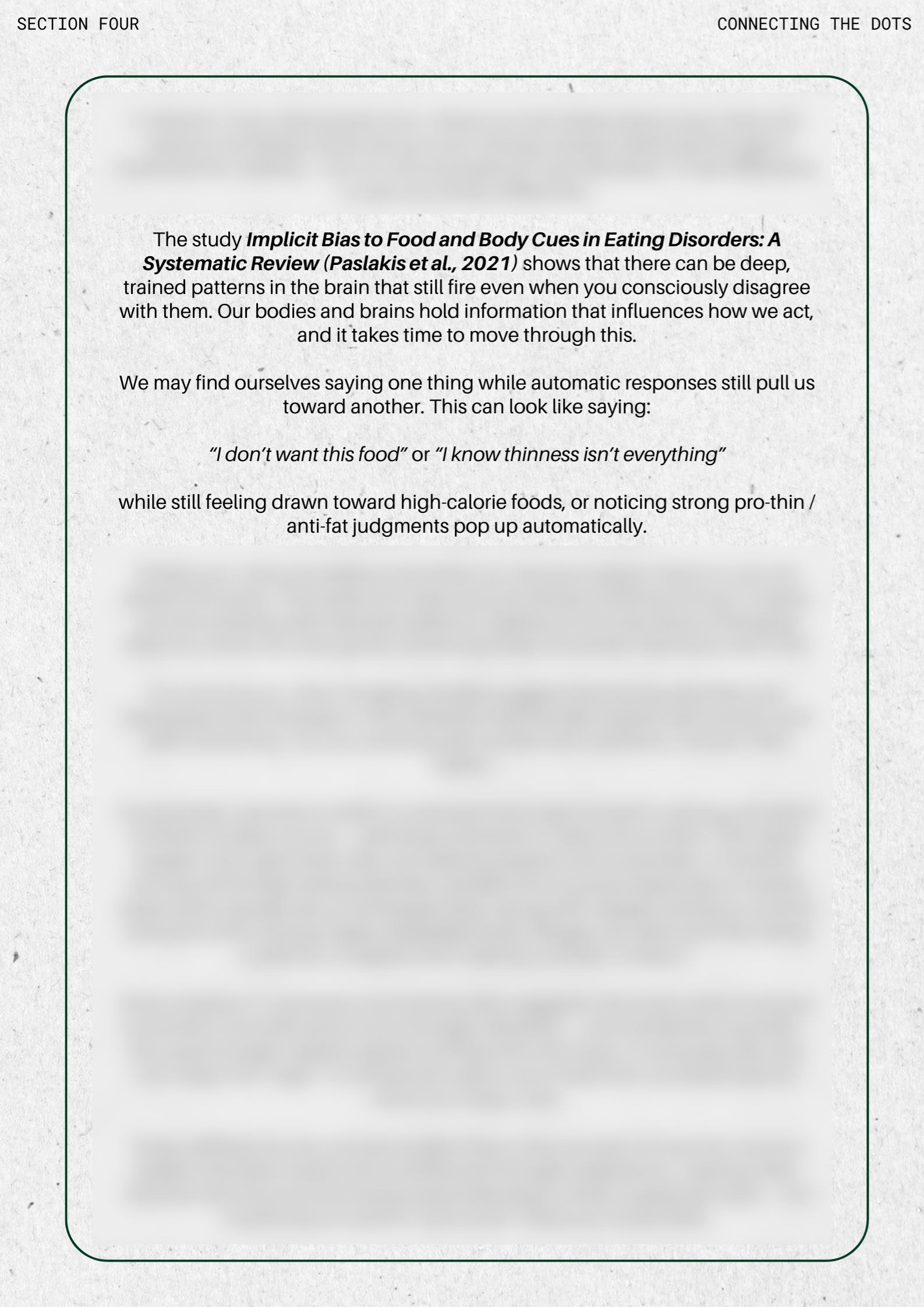
Each section includes clear diagrams, charts, and visual examples that turn complex concepts into something you can actually see—making it easier to understand what’s happening and apply it in your real life.
SECTION 2
A Serious Approach
Eating disorders are serious mental-health struggles—not “bad habits.” This guide focuses on deeper, long-term change by building self-understanding, curiosity, compassion, and acceptance, instead of relying on willpower or staying stuck at the surface level of food rules.
SECTION 3
SECTION 4
Practical Tools
You’ll find reflective exercises and repeatable practices throughout, so you can come back to them whenever patterns get triggered, anxiety spikes, or you want to respond differently in the moment.
Common Questions
A little more clarity before you start
-
Those who have enough emotional space to explore themes that may feel activating at times.
Those capable of asking for support if something feels triggering
Those who are actively working on recovery, but still notice slipping back into familiar patterns, urges, or mindsets that feel hard to shift.
Those fully recovered.
Those that want to understand the deeper “why” beneath things like shame, fear, control, perfectionism, self-worth, and nervous-system coping.
Those who feel drawn to self-development and self-discovery, but want it to be grounded in psychology rather than surface-level motivation.
-
Those currently in acute crisis and need immediate clinical care.
Those navigating a big life change that feels overwhelming or triggering
Those looking for a quick “fix”
-
A clear understanding of Self-Compassion as a psychological tool
A wide variety of tools to meet urges, spirals, and triggers with more compassion
Life time access to the guide
Access to 30+ psychological research papers / studies. Plus book and other recommendations
-
Integrate and share your experience with your therapist.
Self Paced Option: work on your own time. Moving through each section as it feels right for your personal journey.
Community Option: 1 section every 2 weeks, for 8 weeks to keep you moving steadily with accountability and gentle reminders
-
Not therapy, counselling, or clinical treatment
Not a replacement for medical care, a dietitian, or mental-health support
Not a crisis resource
Not a diagnostic tool or a way to assess or “confirm” an eating disorder
Not a meal plan, weight-loss plan, or prescriptive food rules
Not a cure or one-size-fits-all solution
-
The lower price reflects that this is the first time I’m hosting the community, and your participation will help shape how this space grows in the future.

Still have a question?
No problem, I’ll get back to you within 48 hours!
*Disclaimer: By purchasing Beneath the Shame, you acknowledge that it is an educational, self-reflective guide. It is not therapy, clinical treatment, medical advice, crisis support, or a substitute for professional care.
*Purchasing Rights: Beneath the Shame is for personal use only. By purchasing, you agree not to copy, share, resell, redistribute, upload, or reproduce the guide or its contents in any form. By purchasing, you agree not to share the files, screenshots, download link, or course access with anyone else.